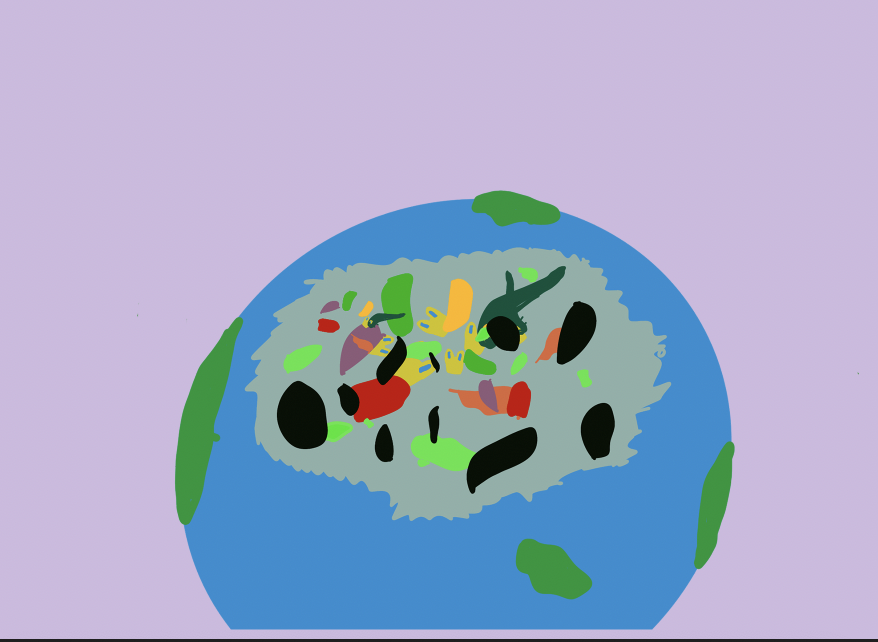
Microplastics can be found virtually everywhere, and recent studies suggest that they may be associated with numerous medical conditions. These particles of plastic range in size from one to five million nanometers. Microplastics can be intentionally formed for use in products such as cosmetics, or they can be formed when plastic waste is degraded over time by natural forces. When larger pieces of plastic waste are ground against abrasive surfaces or damaged by sunlight and wind, microplastics are released. Around four to 10 million metric tons of microplastics are released into the environment per year.
“Plastic does not biodegrade, and so even if it breaks down, it never disappears,” FHS Biology Teacher Alison Gee said. “The first plastic was made not very long ago, and we have radically changed our planet with how much plastic we use.”
The average adult consumes a credit card-sized worth of microplastics per week, according to a Stanford Medicine article.
“I do have concerns, especially because I know that people consume microplastics,”
FHS sophomore Ella Ahn said.
While ingesting microplastics is unavoidable, recent studies suggest that this level of consumption can be linked to increased risk of cancer, heart attacks and reproductive issues. When microplastics enter the body, cells can mistake them for nutrients, according to the National Library of Medicine. These particles can increase the levels of reactive oxygen species (ROS) present in the cell. High levels of ROS can lead to organelle damage, protein oxidation, DNA damage and other dysfunctions attributed to diseases.
Avoiding single-use plastic, especially when handling food, can reduce microplastic intake. But it is not only humans that can suffer severe consequences from ingesting these materials. Plastic can often be confused for food by animals, sometimes causing them to starve from a lack of nutrients. Furthermore, the same cell failure that occurs in humans occurs in animals as well, which has been observed to lead to decreased feeding and fertility in some species. What is being put into their homes and bodies is not up to them, and the microplastics in their system continue to make their way through Earth’s organisms.
“That can be very close to the bottom of the food chain, and there are many organisms that feed off of these organisms. So it has this cascade of effect,” Gee said.
Microplastics can be found in the depths of oceans, arctic ice and even at the peaks of Mount Everest. As temperatures rise, the rate at which microplastics are created accelerates. This issue will not be going away anytime soon and will require effort from government officials, policy makers and ourselves to help limit its harmful impacts. It is ever more important to remain mindful of plastic usage for not only humans, but everything on Earth. Avoiding the purchase of large amounts of plastic, using reusable containers and repurposing or reusing plastics are all small things that can go a long way for global health and the environment.