Many individuals, when asked about their beliefs, are prone to saying they are “unbiased” or “do not want to take a side.” In fact, many people assume a sense of moral superiority when sharing that they believe “everyone is bad,” or that their views are more neutral. In the end, these noncommittal alignments (or lack thereof) do not solve the issues of extremism and polarization in politics, but perpetuate them.
The center of any political spectrum is often dictated by the norms of the society or culture in which it exists. This idea is represented by the concept of the Overton Window, which describes the range of beliefs which are considered acceptable by the general public at any time. The window shifts as the ends of the spectrum are changed and certain ideas are considered more or less “extreme.” Since the “center” depends on the opposing viewpoints which people consider to be ends of a spectrum, the range of acceptable ideas varies widely in different countries and regions.
Complacency when it comes to choosing political sides can have disastrous effects, as individuals purport to be of greater moral fiber when they feel they are not choosing a side. Many try to conflate the idea of having a set of political opinions with being too polarizing and creating too much radicalism or extremism. However, the opposite is often the case. An inability to identify hateful and extreme ideas can result in a compromise that looks more like a concession to the “lesser evil.”
People try to escape having opinions for fear of being called biased. For example, when posed with a hypothetical debate of the sky being blue or the sky being yellow, perhaps the logical settlement appears to be splitting the difference and coming to the conclusion that the sky is green. Seeking out a middle ground in every situation may seem socially safer, or even create an inner sense of goodness and reason, but it is not as grand as one may imagine. After facing enough different positions, you will have made enough compromises that you end up agreeing that the sky was always yellow after all.
Today, the spectrum of ideas in the U.S. seems to be at a key juncture. Having accepted the hatred and division of Donald Trump, our nation has now firmly placed these beliefs within the range we consider plausible and arguable. An inability to reject outright racism and discrimination has not made us any more morally superior or of greater intellectual merit, but has opened the door to greater injustices and dialogue that promotes more exaggerated versions of the same. The right wing has been captured by Nick Fuentes and the America First movement, ready to openly state their racist beliefs and vision for the future. What reason is there to believe that anyone who was able to “not take a side” when it came to Trump will begin to develop a spine when faced with these ideas?
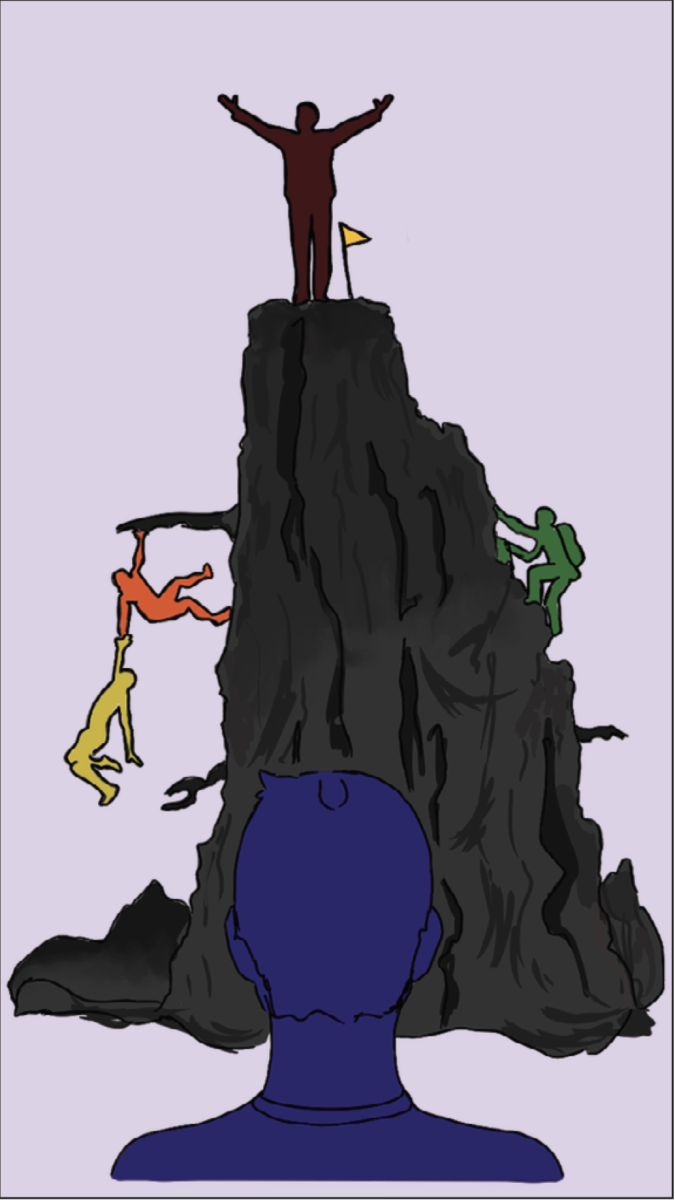
Consider the virtuous, unbiased individual — whose character and ability to “consider all sides equally” elevates him far beyond the rest of society and their shallow ideals. How far are we from a reality in which he, in all his moral righteousness, stands paralyzed in the ballot box, making the tough choice (though not one he cares much about) between banning all women from voting, or only those of color.
Every individual should have the ability to critically consider perspectives and evaluate ideas on their merit, along with being able to identify extreme and hateful ones. One who shields themself from perceived social friction using the concept of “both sides” is far less honest and morally genuine than those who can admit their beliefs and reasoning. A deference to neutrality represents not only a lack of belief, but also a lack of integrity.