The ability to capture a singular moment of time and turn it into a physical souvenir was once deemed impossible. That changed in 1816, when Joseph Nicéphore Niépce created one of the first cameras. From this point on, a new hobby was born: photography. As time passed and technology advanced, vintage grainy photos would become crystal clear with such vibrant colors, as if they were taken out of one’s own eyes. However, these technological developments would come with a cost, as pictures becoming of higher quality was met with camera gear becoming more expensive.
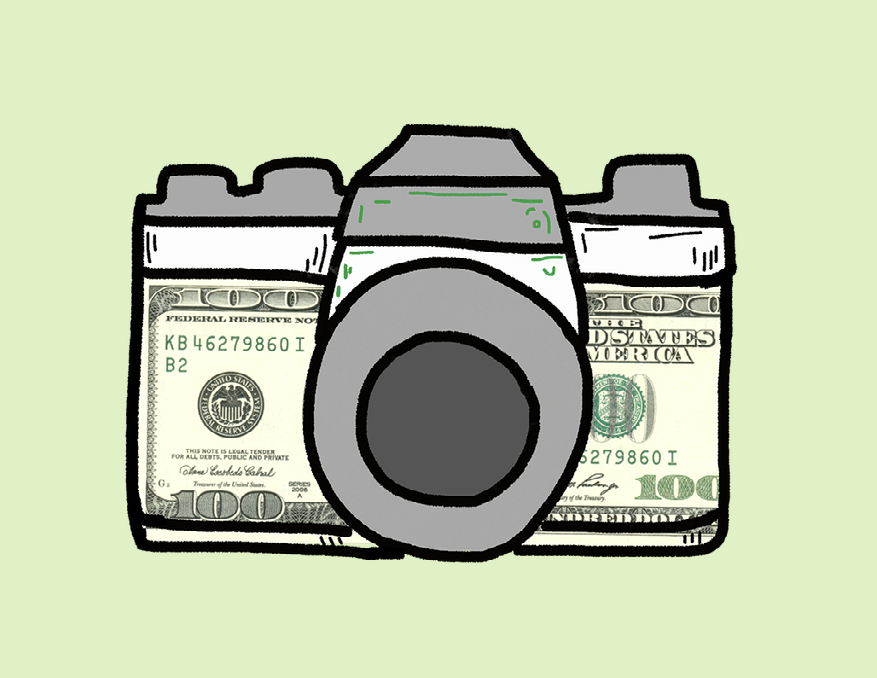
One major factor contributing to the cost of photography is that many cameras are sold by the body itself, without a lens. High-performance lenses are a secondary investment alongside the actual camera, due to their thorough, complex engineering, ensuring maximum precision and performance. Due to this, high-quality lenses can cost thousands of dollars, sometimes even more than the camera body itself. This may give the false idea that good photography needs expensive gear.
However, expensive gear does not automatically make someone a skilled photographer. Though better gear provides more features that can be used, it often leads to many amateur photographers purchasing overly expensive gear than necessary, thinking that it is needed to start taking photos. As a result, some focus on owning advanced equipment rather than on how to take good photos to begin with.
“I’ve seen this rich guy, but he’s really bad at photography and he purchased a Sony Alpha 7, a really expensive camera,” FHS junior Mia Sun said.
This misunderstanding can lead to frustration. Some photographers expect professional results immediately, but ultimately become disappointed when their photos do not meet those expectations. A financial strain can create stress and regret as well, with many feeling guilty over spending large amounts of money on gear.
Rather than draining thousands of dollars on rigs, many may not even have the money to start photography. Many often start with cameras found in their houses, or gifted from their family members, giving them a nice entry to the hobby. With this, they can practice the fundamentals of photography without the financial strains. Additionally, many can learn photography with YouTube videos, friends and family.
“I think there are a lot of free resources out there on the internet,” FHS senior Gia Linh To said. “You can easily go on YouTube and watch videos that start from the basics.”
Photography should be treated as an investment and enjoyed thoroughly. It’s no fun to buy expensive gear, just to not know how to use it, and leave it sitting in your room. While the camera collects dust, so does its potential.