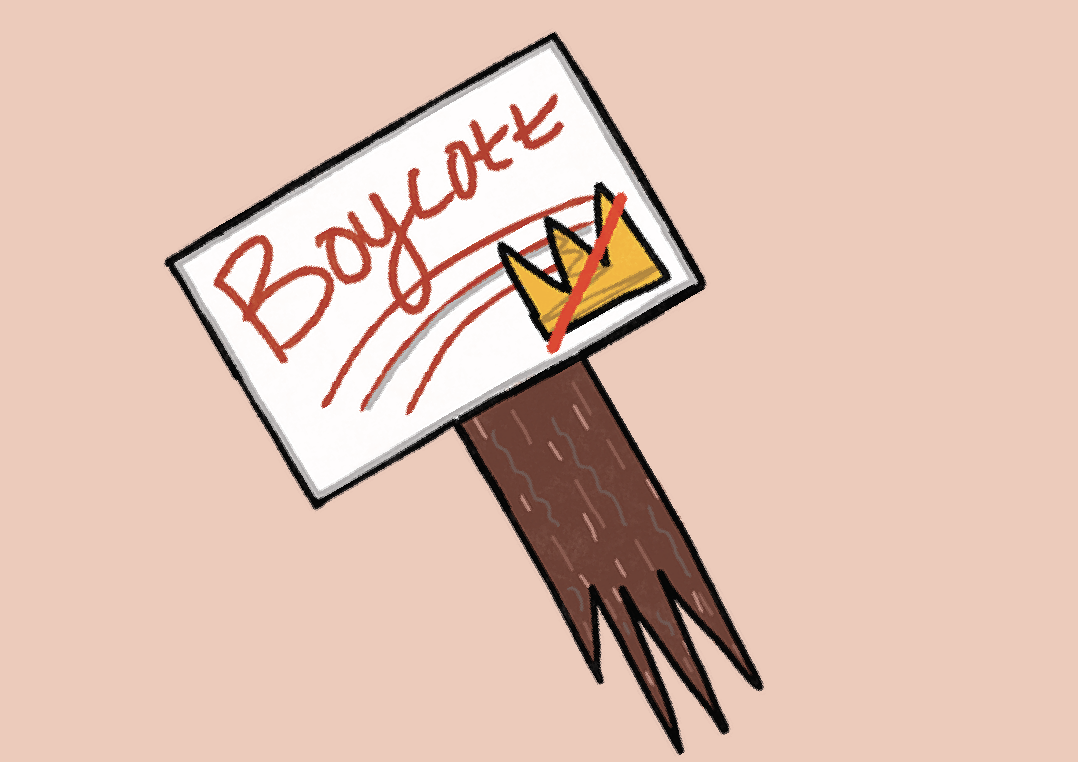
Politically charged boycotts have increased in recent years, with consumers filtering their purchases based on their beliefs. According to a report by Kearney Consumer Institute, 51% of buyers have stopped shopping from stores that do not align with their values.
Boycotts first began to rise during the Gaza war, which started in 2023, leading people to boycott brands such as McDonald’s, Starbucks and others that have ties to the Israeli Defense Forces. Recently, boycott campaigns have extended into the tech industry, targeting major tech companies such as Amazon and Google due to their support of the Trump administration’s immigration enforcement actions and U.S. Immigration and Customs Enforcement (ICE). As new political conflicts emerge, boycott campaigns introduce new lists of brands to avoid, according to USA Today.
Unlike older generations who may have learned about boycotts through the news sources, students are more likely to be exposed to boycotts through social media.
“[Boycotts] can be more effective now, because with social media information and movements can spread quickly, and groups can educate and get the word out,” FHS business teacher Aaron Eeg said.
Students can rely on influences to be informed or to take part in boycotts. Influences, such as social media and peers, are what increases how many boycotts are enacted, according to Science Direct. Social media platforms like TikTok and Instagram have made it easier for boycott campaigns to go viral, bringing attention to those who are not typically involved in boycotts. A single post listing brands to avoid can accumulate many views, turning a small activist effort into a mainstream movement.
Peer influence also plays a significant role in student behavior. When a friend or classmate mentions that they are boycotting a brand, others are more likely to follow out of solidarity, according to Taylor & Francis.
“I find out about boycotts from friends and social media, then I research more about it,” FHS sophomore Alison Simms said.
With social media being a catalyst for boycotts, businesses can face significant consequences. When a boycott gains popularity online, companies do not just face economic backlash but reputational damage, affecting companies in the long run. In 2026, Target faced backlash over scaling back on its diversity, equity and inclusion initiative. As a result, Target is suffering through an approximately $12.5 million loss in revenue and a lasting reputational damage, according to Global Banking & Finance.
For many students, boycotts have become a natural expression of their values.
“Boycotts are a really good form of protesting, especially if you aren’t able to attend protests or speak out,” Simms said.
While many students may use boycotting as a way to speak up for their beliefs, some argue that boycotts may not have as big of an impact as one may hope. Depending on the size of the boycott, some boycotts on multinational corporations may not have an effect whatsoever, which leads many to believe that the majority of boycotts end up with the same result. However, even if that may be the case, students acknowledge that it is still a form of protest.
“Even if it’s a big company, and there’s a small number of people, I think it’s the thought that counts,”FHS senior Amina Mohiuddeen said. “And I think if you gather many people it can definitely actually make an impact.”
From protesting global change to issues in the U.S., the recent rise in boycotts has led many to have the opportunity to protest without having to walk out with posters.. Whether or not every boycott achieves its intended goal, the growing trend reflects a generation increasingly willing to let their values guide their wallets.