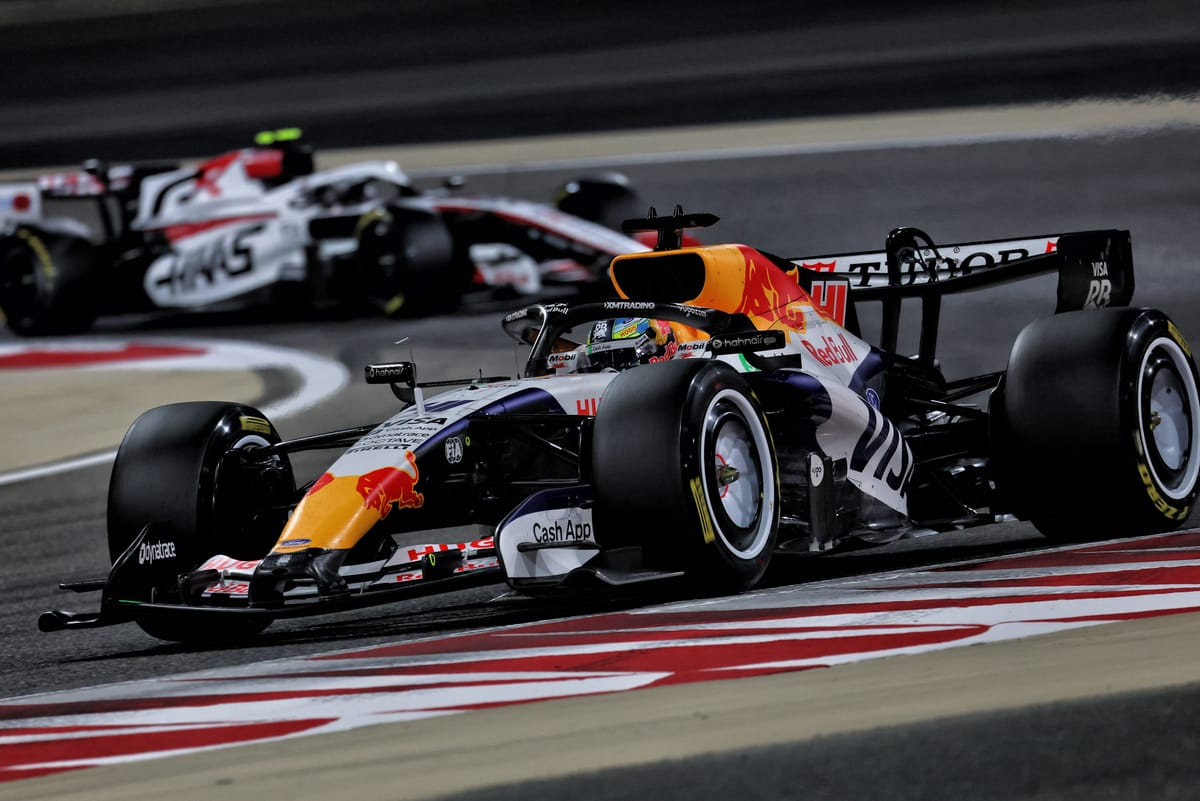
With new regulations, cars, drivers and teams, the 2026 F1 World Championship will bring a plethora of changes, challenges and controversies, ultimately transforming the sport into a new generation of racing.
The 2022-25 seasons were commonly referred to as the “ground effect” era. In this regulation cycle, F1 cars were designed with venturi tunnels on the car’s underbody. This is their main source of downforce, a vertical aerodynamic force that pushes a race car down onto the track, increasing tire grip without adding weight. The Fédération Internationale de I’Automobile (FIA), the governing body of motorsports, embedded these specific regulations to promote closer racing and competition. This era received a substantial amount of criticism from the F1 community, with the proposals not being effective, leading to lackluster racing. This season, the ground effect came to an end.
For 2026, the venturi tunnels were replaced by a much flatter design, at a cost of significantly less downforce. To compensate for this, larger diffusers are implemented to help keep the car planted to the ground. Additionally, the new cars will be smaller and lighter than the outgoing regulations by about 66 pounds, to help with cornering and overtaking. All cars will be mandated to run on fully sustainable fuel, and most importantly, the hybrid power unit, called the MGU-K, will triple its output power, from 120 kW to 350 kW. As this brings the ratio of engine to electric power to fifty-fifty, the cars will become more battery-dependent when racing.
This issue has been prevalent in recent times in the F1 community, with fans saying that the cars will soon become too electric-dependent, becoming a sequel to Formula E, the EV-exclusive branch of Formula racing. Considering that these batteries deplete quickly during segments of a race, it challenges the current nature and spirit of the sport, fearing it will move away from the raw natural racing division it once was.
“With the [new] battery, the drivers have to recharge [much more], which makes it really annoying,” FHS sophomore and F1 fan Arshpreet Ruprah said.
Other new regulations discuss aerodynamics. The F1 cars this year have simpler front and rear wings. This, however, does not mean forgoing innovation; drivers now have the ability to alter various aspects of their wings while racing. On certain straights, the flaps of both wings can be opened to reduce drag, and during turns, they can be closed to maximize downforce and grip. These actions can be taken at any point on the track, giving them a greater advantage. Whereas the Drag Reduction System (DRS) of the last 15 years only allowed drivers to open their rear wing flap when they were within a second of the car in front of them. This is now being replaced by Overtake Mode, which can be deployed under the same conditions and harnesses the aforementioned battery power for an extra boost to get ahead. Unlike DRS, which could only be activated at designated activation zones, Overtake Mode can be activated at any point of the track; it opens more opportunities for strategies as drivers race around the track.
Over the course of the past few races, two teams have emerged as technologically significant: Mercedes AMG Petronas and Scuderia Ferrari HP. Mercedes has been able to leverage the thermal expansion of certain materials to build a powerful engine that outpaces the rest of the grid. Ferrari has developed a rear wing that rotates, facilitating the transition from straights to corners.
The final change for this season is the introduction of a new team: Cadillac. Their performance so far has been reliable and consistent with that of a new team.
It remains to be seen whether these new regulations will succeed in doing what they intended — encourage closer competition and more exciting racing. For now, it seems that fans have an intriguing season to look forward to.
“[I am most eager for the race in] Interlagos, in Brazil, as that track has always been very interesting, and I would like to see how the new cars will race on that circuit,” FHS junior and F1 fan Jason Levasseur said. “It’s also later in the year, so that’s usually when the cars are more developed and show what the actual team can do.”