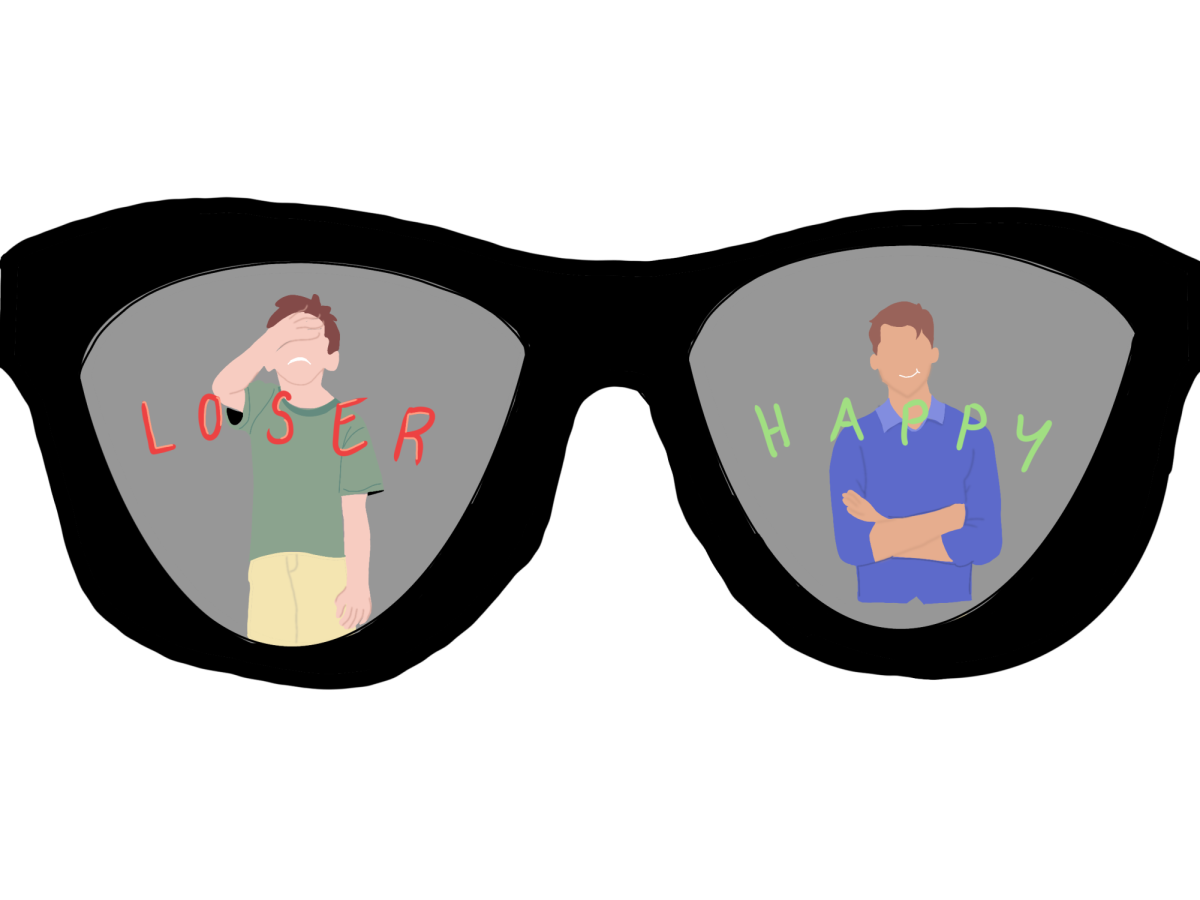
We all experience embarrassment in our lives, yet what defines these moments as “embarrassing” vary from person to person. Embarrassment is the “feeling or showing a state of self conscious confusion and distress” as defined by the Merriam-Webster Dictionary. While this may appear straightforward, the factors that create feelings of embarrassment are far more complex. A situation that one may find humiliating, others could shrug it off. As a result, the boundary between what defines embarrassment and what does not becomes increasingly unclear. Embarrassment is a deeply personal emotion, and whether it is more apparent or dormant is shaped by social dynamics, expectations, and most importantly, our own perspectives.
Situations that make us feel out of place often arise when our interests, values or perspectives differ noticeably from those around us. When one’s preferences or likings misalign with others’, it creates room for judgment, whether they are real or imagined by the receiver. Being the minority in a room full of like-minded people can make one feel exposed, which makes harmless moments cause one to feel self-conscious or embarrassed.
Social norms are another factor that further amplify this feeling. The groups or communities that one is a part of, such as a friend group, classroom, workplace or more, have unspoken societal rules on how to act, dress and communicate. Status differences are another factor in this. Whether they are obvious huge hierarchies such as the relationship between a boss and employee, or smaller, subtle ones like being new to a friend group, these circumstances and expectations feed into the fear of judgement that many have — creating a bigger room for embarrassment to follow.
Miscommunication over situations is another major contributor. Small comments and actions done every day could cause a small, simple social misstep to spiral into embarrassment. The feeling in these scenarios is often not caused by what actually happened but instead by how we interpret them. To be realistic, people focus less on us compared to how much we focus on ourselves. In the U.S., however, overthinking has become a common dilemma, especially among students navigating social and academic pressures. This constant self-analysis allows embarrassment to thrive in the gap between reality and perception, making self-awareness and insecurities tied closely to embarrassment.
Insecurities are aspects of a person that cause one to feel uncomfortable about themselves, ranging from appearance to intelligence. People who struggle with insecurities are more sensitive to how they are perceived by others, and low confidence can turn minor moments into major sources of distress. This ultimately proves that the feeling of embarrassment often says more about how we see ourselves rather than how others see us. Awareness, however, plays a big factor in these two. The more aware someone is of themselves in a social situation, the more exposed and self-conscious they tend to feel. It is important to note that this is not necessarily a bad thing; in fact, self-awareness can help us grow as people. But when paired with insecurities, this becomes overwhelming. Perspective is the critical determining factor. While one person could replay a situation for days, going back and rethinking a specific detail, the other could have already forgotten the situation entirely. The key difference here is interpretation, and rather than feeling embarrassed about what happened, it is more about how we perceive it.
Conversations surrounding the prevalence in emotions around perceptions have gained more traction online as social media has had more conversations about acceptance and vulnerability. Influencers like Emma Chamberlain, who is famous for her YouTube channel and podcast ‘Anything goes with Emma Chamberlain,’ have openly discussed these topics.
“Embarrassing things still happen to me all the time, that cannot be prevented,” Chamberlin said on one of her podcast episodes. “I refuse to be embarrassed … But embarrassment, the feeling, can be prevented. And that’s what I’ve learned to prevent.”
The shift in perspective is as powerful as Chamberlain said. When people stop allowing situations to become embarrassing and start reconsidering their perspectives or interpretations, embarrassment loses some of its sting. The feeling of embarrassment is not a fixed result of a situation, but instead should be seen as something that is shaped by us. The moment we start to realize that what may feel overwhelming today may seem trivial tomorrow, or perhaps what feels embarrassing to you is insignificant to others, we gain a shift in perspective. Embarrassment is truly rooted in our perspectives and how we analyze and understand ourselves in situations. Learning to shift that perspective is one of the simplest ways we can overcome it and live our lives without embarrassment holding us back.