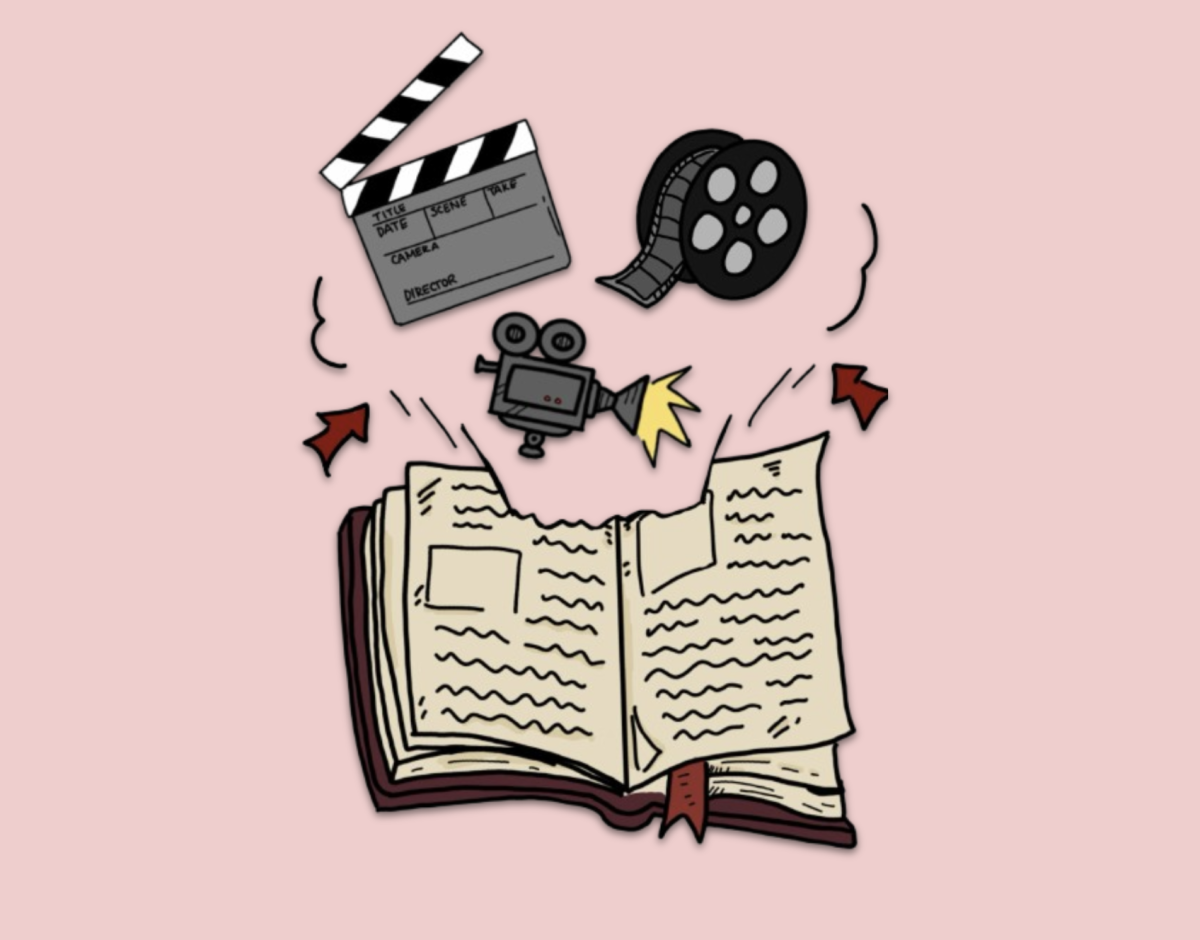
As new cinematic content grows, more book adaptations have been produced recently. Some popular movies that were adapted from books in the 2025-26 year include “The Housemaid,” “People We Meet on Vacation,” “Wicked” and “Wuthering Heights.” Books that sell millions of copies or are rising in popularity are typically the books that get adapted to movies, as studios see stronger readership as an indicator that tickets will sell out well. Book adaptation movies are another way for books to reach out to different audiences, especially the kind who do not enjoy reading or those who prefer to watch films over reading books.
Compared to the books, the movie can include different components and alter accordingly to what the author and producer want. These can include how detailed it is, how the characters are portrayed and casted, how long it is and even changes to the plot. Movies execute their variation of the story with different techniques to bring the story to life. Cutting down the length of the movie allows the plot to be more focused in and instead of long written descriptions, visuals are used to show the details. Since most movies are typically two to three hours long, filmmakers only keep the most important or movie adaptable scenes, making sure to capture the attention of the audience. When it comes to portraying the characters, movies rely on actors’ performances. This includes their facial expressions, body language, tone of voice and how their acting coexists with the music that plays in the background. Plot changes, such as making certain scenes shorter or more complex, happen when filmmakers need to keep it engaging to the audience. At times the endings of movies are even changed to create a more impactful viewing to the audience. Overall, movies depend on visuals and pacing while books depend on long written descriptions and internal thoughts.
“I feel like watching [movies] really helps you visualize and me personally, I like visuals,” FHS junior Shraddha Kotakonda said.
A lot of the time books to movie adaptations can fail. A common factor between these films are being too long, for example “Dune (1984 Version),” and having casting controversy, like in “It Ends With Us.” In “Dune,” the film was entirely rushed as David Lynch, the director, attempted to fit the book into one entire film. The movie was filled with whispering dialogues that contained information that was rushed and hard to hear and some villains were turned into cartoonish monsters who were originally cruel politicians, not monsters. “It Ends With Us,” an adaptation of the book written by Colleen Hoover, was found to be a controversial film by many fans. Critics and domestic violence survivors felt that it glamorized a story of a woman being physically and emotionally abused. “The trailer does a disservice to the fact that this could really raise awareness,” said activist and domestic violence survivor Ashley Bendiksen to NPR. “But it seems to just be glossing over what the movie’s actually about.” Not to mention, by casting massive movie stars and focusing on a “fun” and “perfect” romance for the first hour may translate the toxic relationship differently to viewers. The aging up of the characters enraged many fans. In the book, the main character Lily is 23 and Ryle is 30. In the movie, Blake Lively who is 36 plays Lily and Justin Baldoni who is 40 plays Ryle. Fans felt that it ruined the coming-of-age parts of the story.
“I think one [downside] of all books to movie adaptations is that you kind of lose your imagination of characters,” FHS junior Ruchika Villivalam said.
When the book gets translated to the screen we get to see the face of the character within the pages and bring the story to life. As we have seen, though, an adaptation can fail by being too distant from the movie. A successful adaptation needs a proper “why this happened” behind the original story.