Since its official founding in 1912, Sunnyvale has been a city of innovation and reinvention. Sunnyvale, often referred to as “the city of destiny” or “the heart of Silicon Valley,” is entering a new era of transformation and development.
“It’s been about 120 years [of] evolution, from apricots, prunes and cherries to a huge city,” FHS Assistant Principal Andy Walczak said.
Sunnyvale was founded as the City of Murphy, named after Martin Murphy Jr., a rancher and wheat farmer who purchased the land in the Santa Clara Valley. In 1864, when the railroad from San Francisco to San Jose was built, Martin allowed tracks to be laid across his land to create a stop for passengers and goods as Murphy’s Station. A settlement around the stop developed, called “Encinal,” the Spanish word for “holm oak grove.”
In the 1870s, small fruit orchards and real estate opportunities replaced the Murphy family’s large wheat farms. In 1912, the residents of Encinal voted to incorporate, adopting the name Sunnyvale. The name was chosen to attract new residents from foggy areas near San Francisco.
The renaming marked the beginning of another shift in Sunnyvale’s growth. FHS became the first high school in Sunnyvale in 1923, attracting more residents to the area. The city then shifted into a period of fruit production, drawing new companies like Libby and Del Monte to establish canneries. By the 1930s, Sunnyvale was one of the nation’s leading producers of dried and canned fruit.
With the outbreak of World War II, Sunnyvale’s economy and identity changed, shifting from an agricultural industry to the technology and defense industries. In 1930, Congress selected Sunnyvale as the site of the West Coast dirigible base. This was built to house the U.S. Navy airships, and is now known as Moffett Airfield.
Following the war, the iconic fruit orchards were cleared to build new homes, factories and offices. In 1956, the aircraft manufacturer Lockheed moved its Missiles & Space branch to Sunnyvale, which increased jobs and brought in more families and residents to the area.
“What made Sunnyvale so unique from the surrounding communities was really the schools,” Walczak said. “People came here to work at Lockheed or HP, but they chose to live [in] Sunnyvale or Cupertino because of the schools.”
Since the arrival of Lockheed and the wave of postwar development, Sunnyvale has continued evolving into one of the most important technology and defense hubs in the world.
Today, Sunnyvale is entering yet another phase of transformation, this time centered around urban renewal and reimagined community spaces. Walczak explained that following the war, when Sunnyvale’s major growth began, the city was carefully designed with families and kids in mind. Each subdivision was built around parks, schools and nearby services, creating a community. Even as Sunnyvale continues to grow and change, he noted, these early planning decisions still shape the identity of its neighborhoods today.
Downtown Sunnyvale has seen tremendous change over the past few decades. Sunnyvale Town Center was a two-level shopping center, opened in 1979 on the site of much of downtown. The Center thrived for years as a central shopping hub, but by the early 2000s, the mall had failed financially, and only the Target and Macy’s remained.
“In the 90s, Valley Fair Mall in San Jose [got] so big it just destroyed all the other malls because everyone just went there, so it was all dead,” Walczak said. “Then they finally [built] the office spaces, the restaurants and the Target, the movie theater, the big apartments, so I think they’ve done a good job of planning.”
In 2016, a new developer, Cityline, took over the projects located in and around downtown. Phase One has recently been completed, including residential buildings, homes, retail space, parking garages and new public art. The second half of Phase Two is currently under construction, with even more residential buildings, brand-new office buildings and Redwood Square.
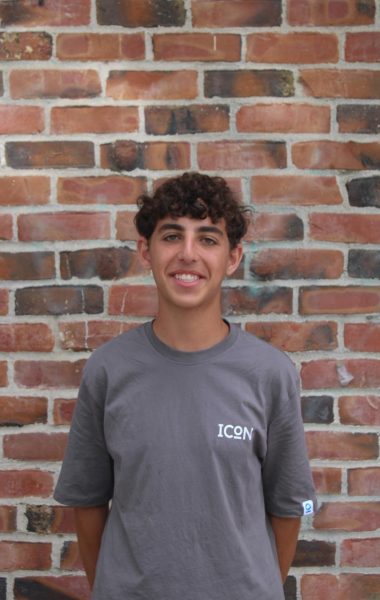
“The new downtown has shaped Sunnyvale into more of a city atmosphere than a town,” FHS junior and longtime downtown resident Enzo Chiocco said. “I think that these new renovations will drive more people to Sunnyvale, which is great in some aspects, but I don’t want the town feel to go away.”
The final phase by Cityline includes adding more offices and public art on the outskirts of downtown. In 2020, Murphy Street in downtown Sunnyvale also underwent some changes. In June 2020, the city temporarily closed South Murphy Avenue to vehicles during COVID-19. In May 2023, the Council adopted an ordinance to convert the avenue into a permanent pedestrian mall, which is still in the works.
“For South Murphy Street, I think it was really an excellent idea that they made it closed to traffic,” Murphy Street’s Leigh’s Favorite Books and Bookasaurus longtime employee Caroline Downs said. “It’s a lot more friendly, people are more open to just strolling in and walking by.”
The new Downtown drew some mixed reactions, but many students and residents appreciate the council’s initiative to make the city even better.
While downtown Sunnyvale stole everyone’s attention for the past few years, it is not the only part of Sunnyvale that has undergone a major transformation. The Sunnyvale Civic Center houses the city’s primary administrative facilities. That includes the City Hall, the Main Library and Public Safety Headquarters. A three-phase, 20-year plan was constructed to modernize the campus. Phase one to build the 120,000 square-foot, four-story new City Hall began construction in December 2020. The New City Hall and addition to the Public Safety Headquarters officially opened on Sept. 23, 2023. Phase Two, which is currently in progress, envisions a revitalized Library. This plan includes meeting modern building standards, increasing community areas, expanding spaces dedicated to children and teens, new and modern technology and finally, providing more space to expand the Library’s overall collection. The measure on Phase Two required a two-thirds majority to pass. It received 59% of the vote and did not pass.
Another renovation project currently underway is the Community Center Grounds Renovation. The adopted design balances community priorities with the City’s functional and maintenance needs. The project is expected to be done in early 2026.
Currently, around the city, Sunnyvale is moving forward with over 100 other projects, small and large. The strategic goal projects focus on a responsive government, a welcoming community, a sustainable city, housing solutions and modern infrastructure. For updates and information about the city and local government, visit sunnyvale.ca.gov.