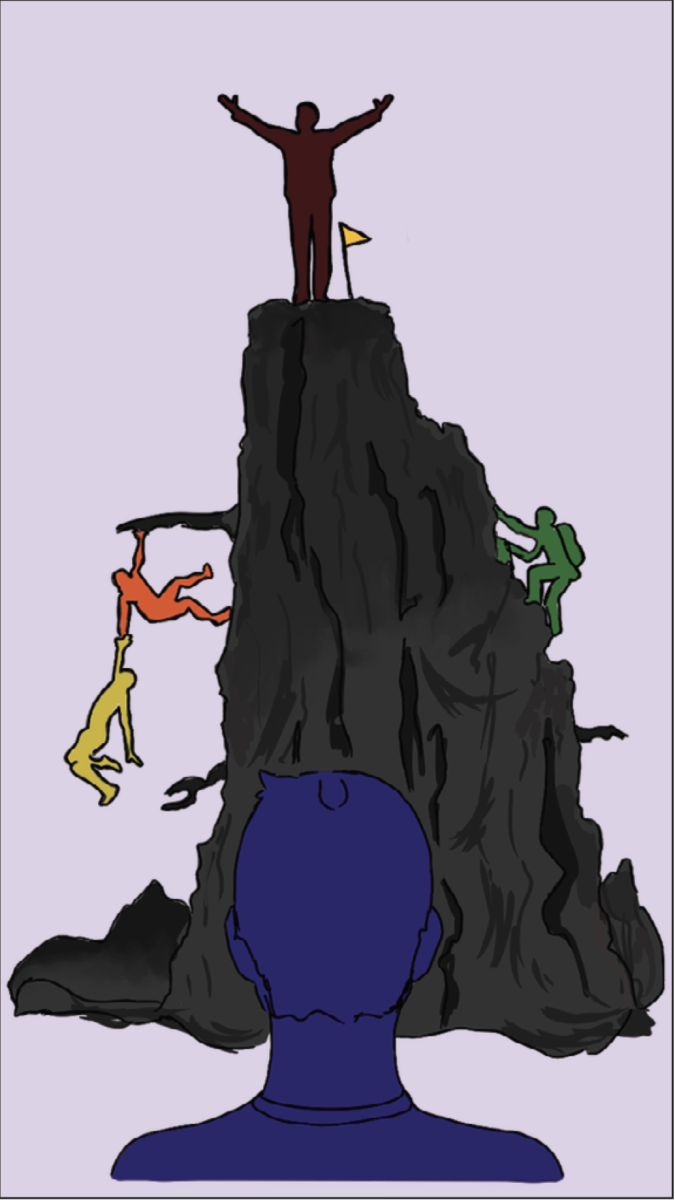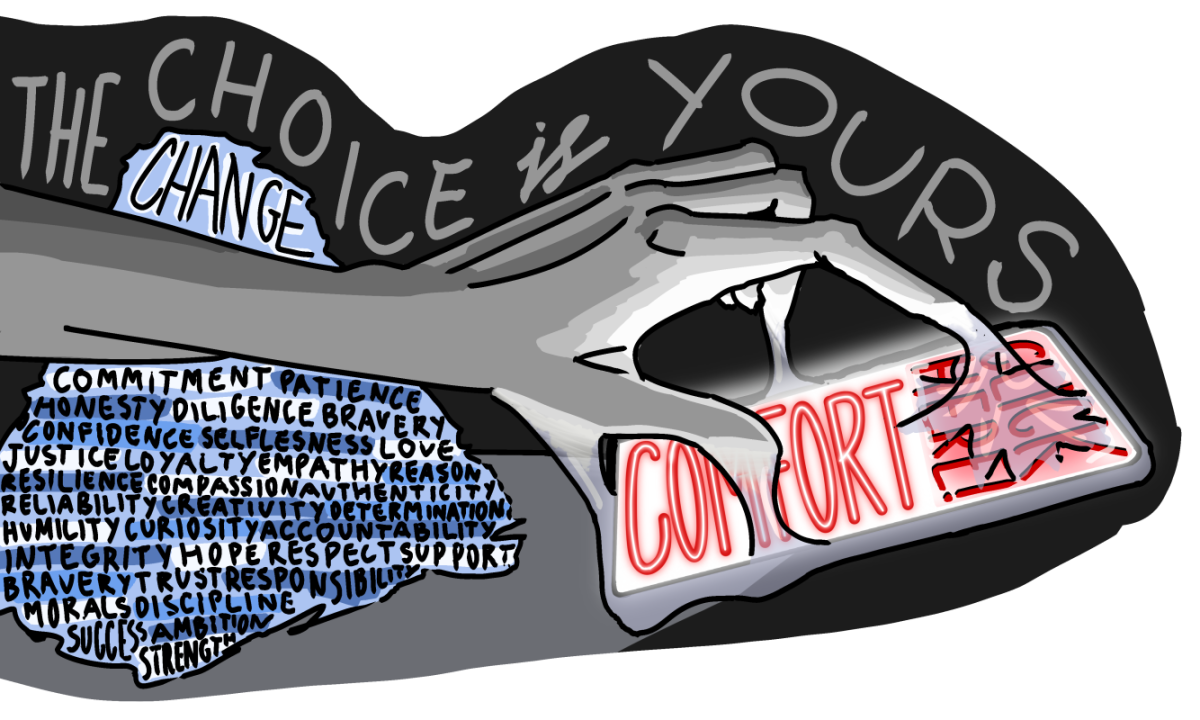
Using an outhouse, chopping wood, mailing letters and going to a library to do research. These make up just a few of the many daily discomforts modern technology has halted the need for. Technological advancements continue to improve life’s efficiency and ease. However, an ever-prevalent over-reliance on comfort threatens a critical, but uncomfortable, process: change.
For most, it is easy to identify desired areas of change. Whether it be a desire for improved health, more productivity, firmer confidence or better relationships, personal goals are plentiful. Unfortunately, goals are harder to achieve than they are to make. Change is typically a long process. It requires a commitment to bearing present discomfort for future gain, or delaying gratification. In other words, delaying gratification is choosing a later, but better, reward over an immediate one. While difficult, it is an extraordinarily powerful strategy for working to meet your goals.
As easy comforts grow, purposeful discomfort pays the price. Habits allow people to behave with reduced cognitive effort, according to the National Institute of Health. Furthermore, reducing cognitive effort is evolutionarily advantageous. Our survival instinct is to expend as little energy as possible in order to save it up for the potentially dangerous future. Thus, consistently making choices to optimize positive emotions and minimize negative ones builds a mindless habit.
To understand the modern implications of habits of ease, consider the choice between online entertainment and working on homework. In the short term, the first may spark amusement, laughter and interest, while the latter may induce boredom, frustration and overstimulation. Many make the easy choice of pleasure-centered behavior, ignoring long-term outcomes of lowered self-esteem and failure to meet goals. As the same principle repeats, the habit of staying comfortable forms.
When comfort is the norm, progress becomes impossible. Valued personality traits, such as selflessness and diligence, are so difficult to attain because they can be easily traded instant gratification in the moment. Nevertheless, working through this difficulty for the sake of becoming a better person builds confidence. Choosing later gratification will facilitate growth for the better. Similarly, many of society’s largest issues require sacrifices of present ease to spark future change. Political leaders sacrificing personal gain to prioritize ethics would result in fewer unfulfilled needs and less systemic oppression. Businesses sacrificing profit to prioritize taking care of the environment would result in less pollution, waste and harm to the planet. Anyone sacrificing time to consider how their actions affect others would result in less harm done. Though vastly oversimplified, each positive change listed is only possible through a commitment to delaying gratification.
In practice, however, present sacrifice is extremely challenging. Interpersonal trust and hope are two factors that affect one’s ability to delay gratification, according to Frontiers in Psychology and the National Institute of Health. Social trust is largely out of an individual’s control. Similarly, while one can choose to have hope, accompanying doubt makes it difficult to maintain. Attempting to orchestrate heightened levels of interpersonal trust and hope would take significant effort, something humans naturally work to minimize. Therefore, sheer willpower is not enough to delay gratification effectively. Making a habit of present sacrifice is necessary.
Spoiled with comforts, I consider myself very fortunate to have been born in the modern age. I enjoy texting my friends, Googling each curiosity and having vast access to information. However, I also acknowledge that these daily joys come with a responsibility. Indulging in temporary pleasures while ignoring brewing problems is a direct abuse of our free will. In order to use the incredible technologies we have developed for positive change, we must start small. Witnessing the development of widespread issues like political polarization, wealth inequality, climate change, violence and other mountains of selfishness and hate can be discouraging. However, we can take steps toward pioneering positive change by forming the habit of delaying gratification in our own lives. With every decision, we make the choice: our future or my comfort?