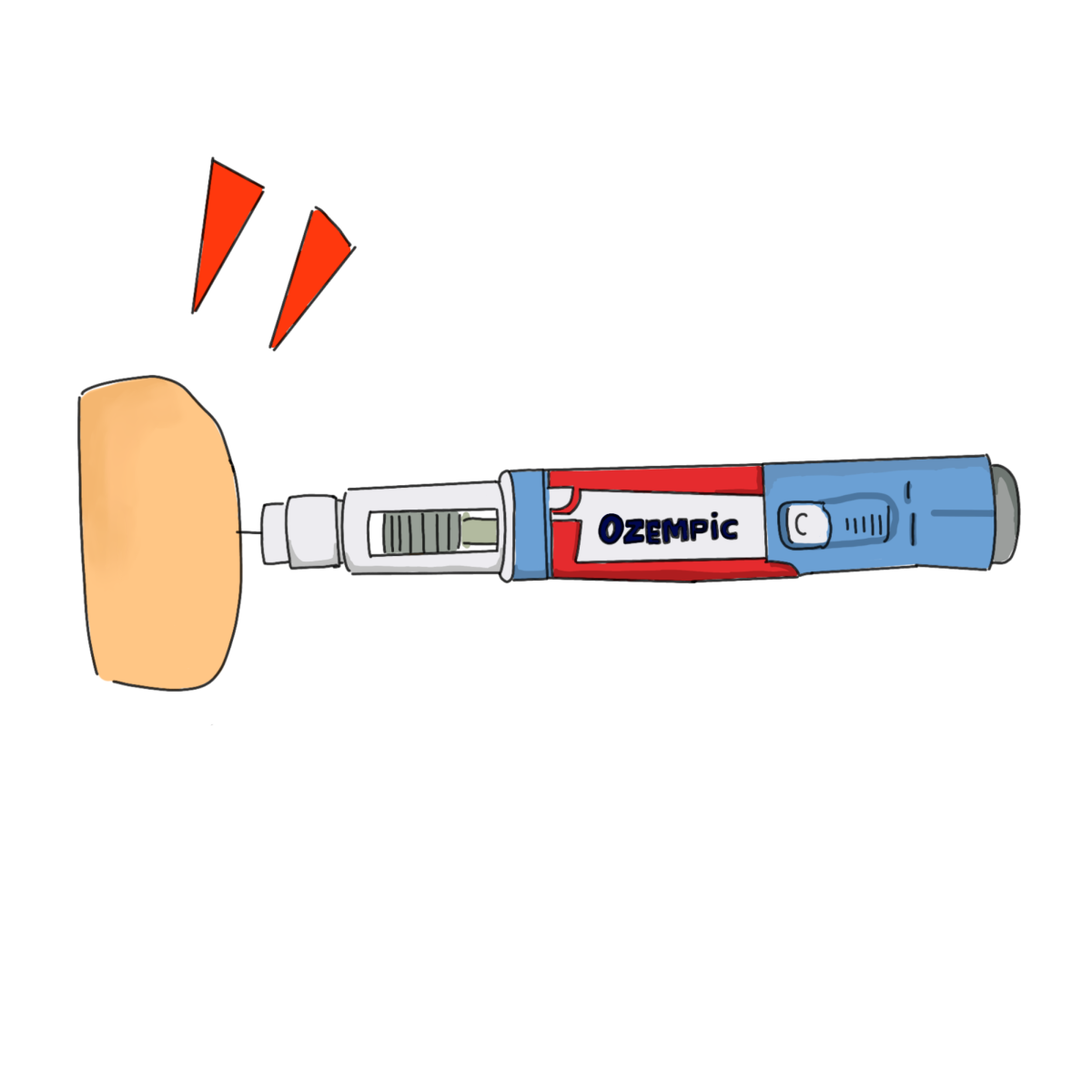
In 2023, the U.S. weight loss market swelled to a historic peak: $90 billion. The reason? Ozempic, the internet’s latest weight loss drug obsession. Ozempic, a semaglutide medication, originated as a treatment for Type 2 diabetes and obesity. Medical drugs being misused for nonessential reasons is nothing new. Xanax, an anxiety-relief prescription medicine, is often used to get high, rather than for its intended purpose. Similarly, Ozempic’s consumers are not just diabetic patients anymore, but now include a host of celebrities, influencers and others hoping to lose a couple pounds.
As Ozempic usage runs rampant in Hollywood, terms like “Ozempic face” have been created. “Ozempic face” is a term describing the aftermath some users of the drug experience. Marked by a sunken, hallowed face and sagging skin or wrinkles, Ozempic face occurs due to the unnaturally rapid weight loss and decrease in collagen experienced when the drug is used excessively. To be perfectly clear, Ozempic and other semaglutide medications, such as Mounjaro, are legitimate medications that can be properly used for weight loss in diabetics or obese patients, but under professional guidelines and dosages. Currently, TikTok videos showcase influencers promoting Ozempic as a miracle weight-loss tool; “the desired results of working out, without the actual exercise!” We have all heard the saying — if it sounds too good to be true, it is probably not true.
Besides the obvious danger of a drug overdose, using Ozempic as a quick, mindless shortcut to weight loss dismisses all the positive effects of exercising. Physical exercise promotes bone health, mental health and prevention of diseases like cardiovascular disease or diabetes, according to the World Health Organization. Yet, many still advocate for the use of semaglutide drugs for unnecessary weight loss. In 2024, English reality TV star Kelly Osbourne replied, controversially, to a question regarding her thoughts on the use of Ozempic.
“People hate on it because they wanna do it,” Osbourne said in an interview with E! news. “The people that hate it the most — are the people that are secretly doing it. Or pissed off they can’t afford it.”
Unsurprisingly, the majority of the comments criticized Osbourne’s careless, and might I say, classist, attitude regarding the drug’s usage. Interestingly, it seems Osbourne’s support for Ozempic may have some more personal motivations. The top comment reads: “The Ozempic face, I’m dead.”
Despite social media’s negative perception of Ozempic usage, many others still actively use it as a beauty enhancement tool. One can simply search up the word “Ozempic” on TikTok to find countless videos of usage tutorials, before and after “glow-up” videos and personal testimonies of the medication’s results. The fact that in this current day and age, a beauty trend — a luxurious privilege — is centered around buying out a prescription medicine used by genuine diseased people, all in the effort of obtaining an ideal body type, is undeniably dystopian. What does this say about today’s society? Simply, in the past decade, beauty standards and the pressure they exude have gotten so extreme that people — Hollywood stars, social media content creators and the average person — are turning to prescription-grade drugs to satisfy their craving: The quintessential, thin body popularized in the media everywhere. Ozempic’s popularity is just another symbol of the dangerous obsession our current generation has with vanity.