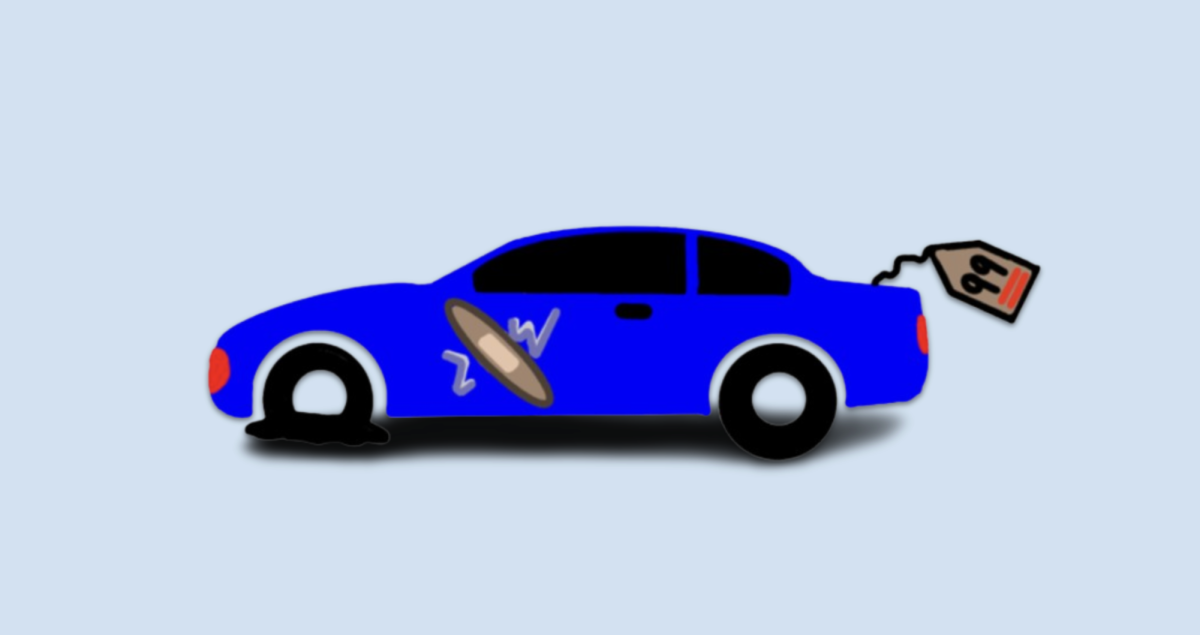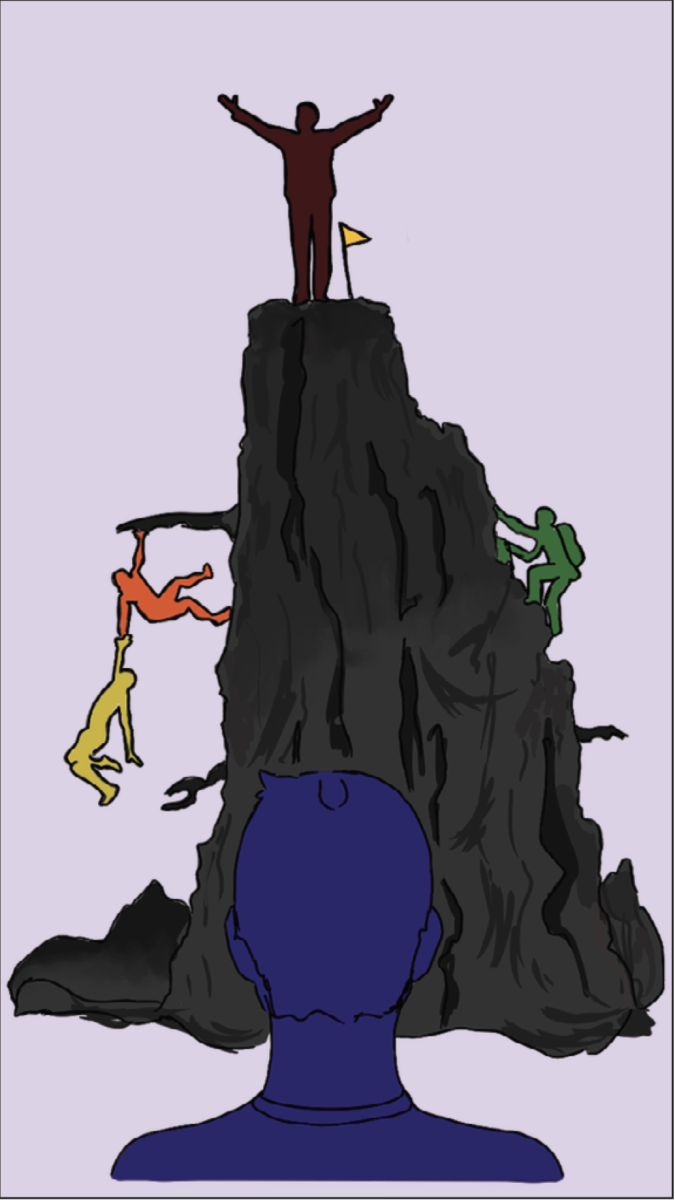
Korean pop, also known as K-pop, is an internationally popular genre known for blending genres ranging from pop, rock, hip-hop, R&B and more. Despite diverse influences, its lyrics remain in Korean, carrying traditional elements while occasionally incorporating English words. While the genre is globally popular, many elements of its industry are harmful to the idols, who are trained entertainers. Mental health issues like anxiety and depression can stem from many factors, such as exploitative working, abuse, restrictions and societal pressure to be perfect. South Korea has one of the highest suicide rates in the world because mental illness is often thought of as a display of selfish weakness.
In 2018, K-pop girl group LOONA debuted under the company BlockBerry Creative, a subsidiary of Polaris Entertainment. The company was later sued by one of their members, Kim “Chuu” Ji-woo, for mistreatment and financial exploitation after the company kicked her out of the group on Nov. 25, 2022 and sued her for alleged abuse towards staff and misuse of power. The company had not paid her or her group members since their debut. The members later terminated their contracts with the company.
Problematic fan culture is another reason for mental health issues arising in idols. These mental health issues result in serious issues like suicide. Fans can be obsessive, possessive and parasocial towards artists. Fans trade and sell private information for money, including addresses, phone numbers, and private photos and videos. Fans can also excessively criticize their idols for many things. K-pop girl group IVE’s Jang Won-young is often berated and criticized by both fans and haters for certain mannerisms, such as eating a strawberry with two hands. Many videos of her go viral on various social media platforms where many label her as a “pick me” and “attention seeker.” Like her, many idols suffer through intense amounts of hate for trivial reasons.
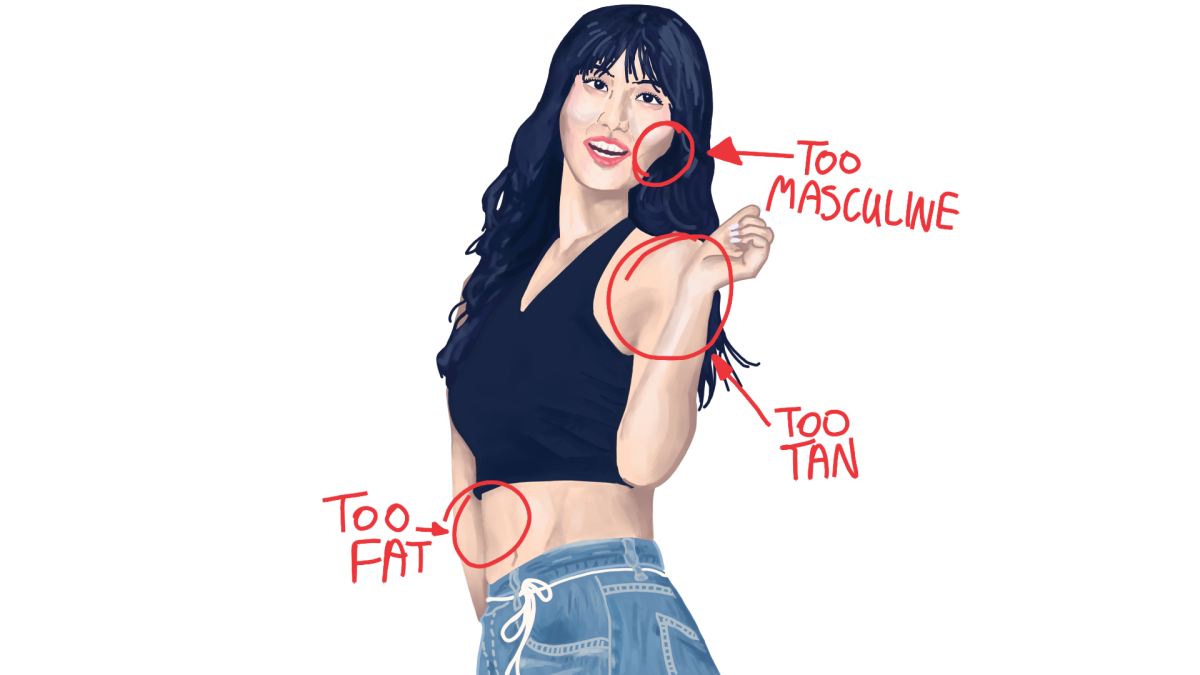
TWICE’s Momo revealed that the company forced her to lose about fifteen pounds before the group’s debut, achieving this by solely eating ice cubes for a week as well as training every day. The industry is heavily influential among youth, therefore information like this could influence people to normalize or follow this routine.
Similar to body image and standards, the idealization of pale skin stems from the customs of the nobility in East Asia and has connections to Western imperialism. Due to South Korea’s intense beauty standards that prioritize said paleness and slim figures, plastic surgeries are common among both male and female idols, as they are seen as crucial in achieving success and social acceptance. These standards often lead to colorism, with many darker-skinned idols facing discrimination or fetishization.
Along with the beauty standards, female idols are sexualized but are expected to project innocence. On the contrary, male idols must balance masculinity with a hint of femininity to earn praise. Female idols face intense criticism over their image — which is primarily physical. Both genders are criticized for failing to meet strict beauty standards.
In recent years, K-pop has increasingly borrowed from African American R&B, hip-hop and rap style, but there has been a lack of awareness and understanding of culture, leading to multiple incidents of cultural appropriation, causing disappointment amongst many international fans. Insensitive appropriation is deeply offensive when adopted without respect for Black cultural heritage or awareness of the systemic racism still faced by African Americans today.
While K-pop and its industry may be praised for its global influence and creativity, there is a serious and harmful side beneath the surface. Idols continue to face mistreatment, harassment, exploitation and pressure, which can impact their overall well-being.